

Avatar: How James Cameron’s Dream Became One of the Most Successful Films in History
Some films are designed to entertain. Others are designed to transport.
Avatar belongs firmly in the second category.
James Cameron did not set out to make just another science-fiction blockbuster. What he pursued, patiently and obsessively over decades, was a world. One so immersive that audiences would not simply watch it, but feel as though they had visited it.
The story of Avatar is not just about box-office success or technological breakthroughs. It is about how ideas form, disappear, return, and grow, sometimes over a lifetime, before finally finding the moment they are meant to exist.

A vision that began with a dream
Long before Pandora had a name, Cameron has said the imagery came to him in fragments, dreamlike, vivid, and difficult to shake.
One of the earliest seeds, according to Cameron, came indirectly from his own childhood. He has shared in interviews that his mother once described a dream she had of a tall blue-skinned humanoid figure, roughly ten feet in height. At the time, it was just a story passed between parent and child. But the image stayed with him.
Cameron has never claimed this dream was a direct blueprint for the Na’vi. Instead, he has framed it as something subtler, an image that lodged itself in his subconscious and resurfaced creatively years later when he began imagining an alien species that needed to feel unfamiliar, yet emotionally recognisable.
Around the same time, Cameron himself experienced a powerful recurring image, what he later described as a bioluminescent forest, glowing plants, and an ecosystem that felt alive in a way cinema had not yet captured. He even sketched these early visions, some of which closely resemble Pandora as audiences know it today.
These were not story ideas yet. They were world ideas.

Building a world before writing a plot
Unlike many large-scale films that begin with a tight screenplay, Avatar grew outward from its environment.
Cameron has long been fascinated by ecosystems, deep-sea biology, anthropology, and the idea of interconnected life systems. Pandora was designed not just as a setting, but as a functioning planet, one with its own rules, rhythms, and spiritual logic.
Only after that world existed did the narrative take shape.
By the mid-1990s, Cameron had already written an early version of Avatar, then known internally as “Project 880.” Many of the core ideas were already there, humans exploiting a distant planet, corporate extraction, and the use of genetically engineered avatars to bridge the gap between species.
What is remarkable is how little the concept changed over time. What changed was Cameron’s willingness to wait until cinema itself could support what he imagined.

Why Avatar had to wait
Cameron has been explicit about this. Avatar could not be made when it was first written.
The performance capture, facial animation, and 3D immersion required to make Pandora believable simply did not exist yet. Rather than simplify the vision, Cameron chose to delay the film, sometimes for years, while technology caught up.
During that waiting period, Cameron was not idle. He pushed advances in motion capture, virtual cameras, and stereoscopic filmmaking. In many ways, Avatar did not just use new technology. It forced it to exist.
When production finally moved forward in the late 2000s, the film was not simply another sci-fi release. It was a technical and experiential leap, designed to reset audience expectations of what a cinematic world could feel like.
The long game that paid off
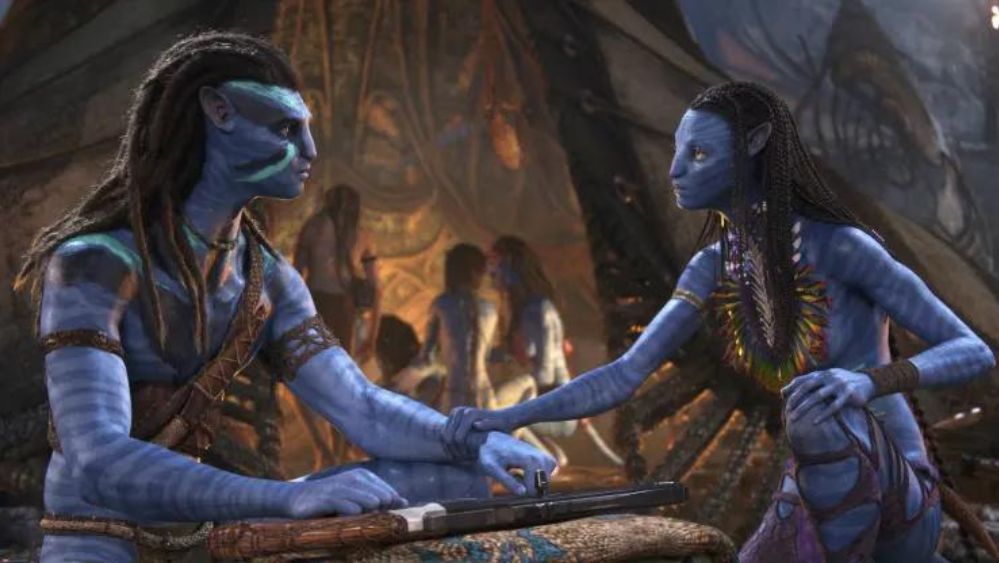
When Avatar released in 2009, its impact was immediate and historic. It was not just a commercial success. It became a cultural event, redefining what audiences expected from big-screen spectacle.
More than a decade later, Cameron repeated the feat with Avatar: The Way of Water, proving the original was not a fluke. And with the most recent installment, Avatar: Fire and Ash, Cameron has extended a record few directors have ever approached.
Recent industry reporting places Cameron as the first filmmaker to direct four films that have each reached the billion-dollar mark worldwide. This run includes Titanic, Avatar, The Way of Water, and Fire and Ash. This is not just success. It is sustained dominance at a scale modern cinema rarely sees.
Why Avatar matters beyond the numbers
It would be easy to reduce Avatar to box-office statistics or technical achievements. But that misses the point.
Avatar matters because it represents a different way of making films, one rooted in patience, world-building, and respect for the audience’s intelligence and imagination. Cameron did not chase trends. He waited for his idea to be ready, and for the medium to be capable of delivering it properly.
From a childhood story about a blue figure, to decades-old sketches of glowing forests, to a franchise that reshaped blockbuster filmmaking, Avatar is proof that some ideas are not meant to be rushed.
They are meant to grow.